


Stem cell banking gained a lot of attention in the mid 2000’s. It evolved to become one of the most prominent advancements in preventive healthcare and regenerative medicine. By preserving cord blood stem cells in the 21st century, families have the ability to support their future medical needs if any arise suddenly. By preserving stem cells right at the birth of the baby from their umbilical cord blood and tissue, families can gain access to long-term health protection. However, the viability of the stored stem cells is dependent entirely on how they are processed and stored.
However, accredited stem cell banks follow strict guidelines when it comes to the safety and quality assurance of the stored stem cells. They follow up-to-date technologies for cryopreserving the stem cells, which maintains the quality and viability of the stored cord blood cells for more than 20 years.
Why do safety standards matter in stem cell banking?
Stem cells are unique cells that can regenerate tissues and treat chronic diseases. However, their structural integrity and function depend entirely on how they are processed and preserved. A small risk of contamination, improper storage methods, or small errors during processing can affect their viability.
To prevent such risks, renowned and reliable stem cell banks follow internationally recognised laboratory standards that lay down a standard process for procuring, storing, and preserving stem cells. According to the guidelines, processing of stem cells must take place in sterile and controlled environments with the help of trained professionals who ensure validated procedures.
Leading stem cell banks stick to the below mentioned protocols:
-
Stem cells should be preserved within 48 to 72 hours of collection to maximise their viability
-
Using sterile equipment to procure and process stem cells.
-
Checking stem cells for microbial contamination before storage.
-
Using a strict labelling and tracking system
-
Using proper cryopreservation techniques
-
Maintaining a controlled temperature that minimises the risk of contamination
-
Equipped cryo-storage vessels with sensors and alarms to regularly monitor temperatures
How Are Stem Cells Processed Before Cryopreservation?
Before banking, stem cells go through a few mandatory steps that prepare them for long-term storage. The steps followed are:
-
Once collected, the sample is sent to the laboratory in temperature-controlled conditions.
-
After arriving at the laboratory, lab technicians test the sample for cell count, cell viability, and microbial contamination.
-
Next, a pentastarch, a liquid reagent, is used. The pentastarch technique depends on a unique non-particle-based separation mechanism that segregates the components of blood cells during processing. This method helps improve cryopreservation. The technique maintains the viability of stem cells and is considered one of the fastest and most reliable separation processes.
What is Cryopreservation Technology?
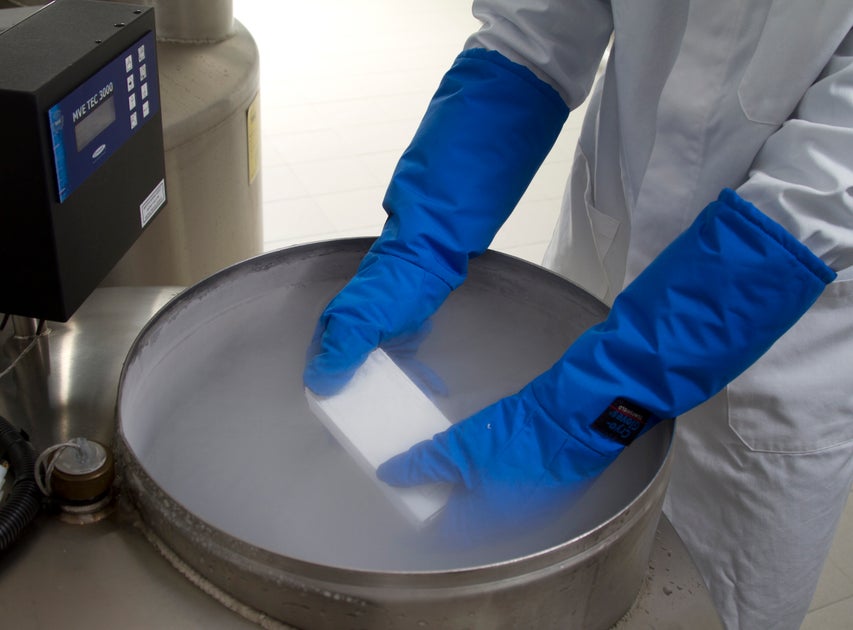
Cryopreservation is a clinical method used to keep stem cells at very low temperatures to maintain their viability for longer periods of time. Modern stem cell banks use this technology to freeze the cord blood cells at low temperatures. This process allows the stem cells to cool slowly without the formation of ice crystals.
Once frozen, the cells go into controlled cryogenic storage systems that work at extremely low temperatures (-196 degrees C). This temperature pauses their cellular metabolism, which helps the cells to survive for decades.
Safety, Monitoring, and Contamination Standards in Stem Cell Banks
Maintaining the safety of stored stem cells requires proper monitoring and strict protocols to prevent contamination. Prominent stem cell banks use multiple methods to ensure the security and tracking of stem cells throughout their time of storage.
-
To ensure proper tracking, each stem cell sample is given a unique ID that is maintained in digital records, including date of collection, laboratory results, storage location, etc. This system also helps to locate the samples at the time of retrieval.
-
Quality control for stem cell banks include routine monitoring of storage conditions, particularly the temperature of cryopreserved samples, as well as periodic audits and documentation to verify compliance with safety standards.
Conclusion
Safety standards and cryopreservation technology form the foundation of stem cell banking. With the help of controlled laboratory procedures, advanced techniques for preservation, and robust monitoring systems, stem cell banks can preserve cord blood cells that can be used for over 75 years. LifeCell Stem Cell Banking is India’s first and most internationally accredited stem cell bank, recognized by AABB (formerly the American Association of Blood Banks) and AATB (American Association of Tissue Banks). These accreditations ensure high-quality, safe, and reliable stem cell storage enabling families to safeguard their baby’s and family’s health for years.